Pyrolysis Equipment SalesReplicating a proven plant, anywhere in the world
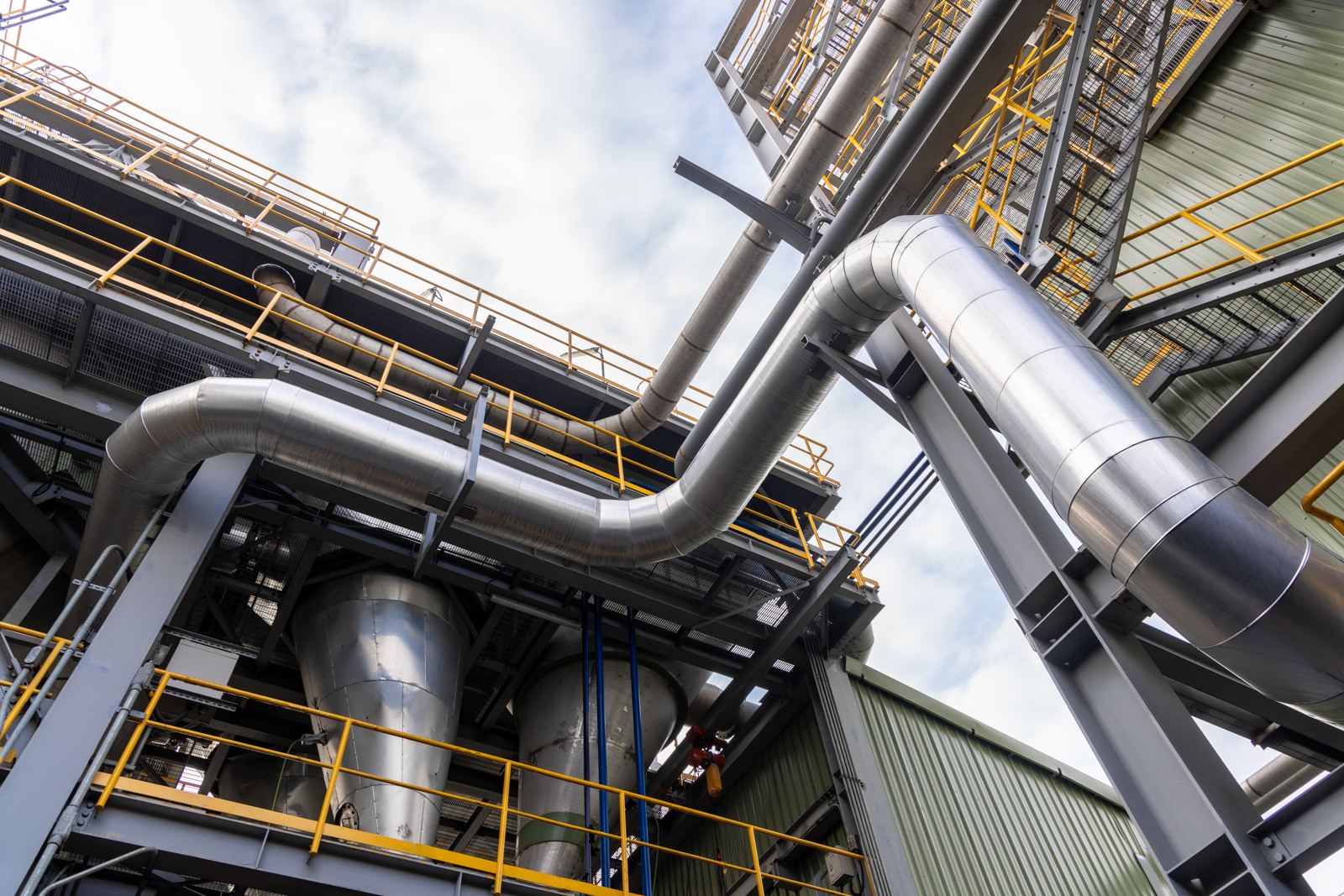
Enrestec combines patented pyrolysis technology with in-house engineering to deliver everything from feasibility and design to fabrication, commissioning, training and operations support. Our Pingnan plant, processing 70,000 tonnes of waste rubber a year, runs the same system we deliver to customers.
End-of-life tires come in; recovered carbon black, pyrolysis oil, steel and steam go out. Non-condensable gas is burned to heat the process, so the system needs no external energy.
1Tire shredding
Steel-wire removal, coarse and fine shredding and fine-wire separation produce chips under 3 cm with less than 1% steel.
2Continuous pyrolysis
Automatic feeding into a high-temperature, oxygen-limited reactor running 24/7 at over 90% uptime, yielding about 28±2% crude carbon black and 38±2% pyrolysis oil.
3rCB refining
Magnetic separation, grinding, pelletizing and drying under strict quality control turn crude carbon black into pelletized rCB.
4Pyrolysis oil treatment
Condensed pyrolysis vapours become crude oil, which is settled, filtered and de-sludged into on-spec product.
5Utilities & energy recovery
Non-condensable gas fuels the process with no external energy, and waste heat can raise steam. Cooling, compressed air, storage, wastewater and off-gas treatment are designed to suit each site.
Our semi-continuous systems also handle waste oil pipes, oil sludge, contaminated soil and other irregular materials that continuous systems cannot.
End-to-End Delivery
02 / SCOPE
01Feasibility
Feedstock, capacity, offtake and return on investment.
02Engineering
Process, equipment and layout design to local regulations.
03Fabrication & installation
Designed and built in Taiwan, installed and supervised on site.
04Commissioning & training
Commissioning to stable operation; training for operators and QC staff.
05Operations support
Long-term technical support, spare parts and product quality management.
How We Work: FEED First, Then SPA
03 / PROCESS
A pyrolysis plant is a major investment, so we start with a Front-End Engineering Design (FEED) to clarify requirements on both sides quickly. Its basic design package — process flow, material balance, P&IDs, equipment list, plot plan and equipment estimate — gives Enrestec's engineering team and your EPC contractor a common basis, so the Sales & Purchase Agreement (SPA) and construction move faster.
MOUDiscussion & MOU
Align on capacity, site and key commercial terms, then sign an MOU.
FEEDFront-End Engineering Design
Process and engineering design based on your site, feedstock and utilities, ending in an equipment cost estimate.
SPASales & Purchase Agreement
Equipment and technology licence contract built on the FEED results, followed by fabrication.
BUILDFabrication & delivery
Built in Taiwan and shipped, with on-site installation supervision.
CODCommissioning & training
Commissioning and performance testing to contract, plus operator and maintenance training.
O&MLong-term support
Ongoing licence, spare parts and operational support.
01Confirm technical and investment feasibility with a smaller commitment
02Basic design and equipment estimate in 4–6 months
03A shared design basis for Enrestec and your EPC contractor
Actual timing depends on project scale. FEED deliverables are basic design documents for engineering evaluation; detailed equipment drawings, data sheets and O&M manuals are provided under the equipment contract.
OSBL · Client / local EPC
ISBL · Enrestec
Chip transport & feeding
Furnace & pyrolysis reactors
Condensing & gas/oil separation
Crude CB pretreatment
Milling, pelletizing, drying, packing
Oil treatment pumps & filter press
PLC, HMI & motor control
Civil works & buildings
High-voltage power
Cooling water, air & water supply
Wastewater, off-gas & dust
Fire, lighting & CCTV
Local permits & compliance
Clear Battery Limits
Enrestec supplies and engineers the core pyrolysis and product-handling equipment inside the battery limits (ISBL). Civil works, buildings, utilities, power and local permits outside the battery limits (OSBL) are handled by you or your local EPC contractor, with Enrestec providing interface requirements and process emission data.
What we clarify together during FEED
Target capacity, product mix and offtake
Feedstock characteristics (chip size, steel and moisture content)
Site conditions: location, area, geotechnical and access
Utilities: power, water and more
Local environmental regulations and emission limits
Flexible Partnership Models
04 / MODELS
Technology licensing
License Enrestec's patented pyrolysis technology and process know-how to build and run your own plant.
Joint investment
Build a plant together with local partners, sharing feedstock, markets and results.
Operation & maintenance
Our team supports or runs day-to-day operations to keep output and quality stable.
What Our Customers Gain
Commercial returnTurn end-of-life tires into oil, rCB, steel and steam — meeting environmental duties while creating lasting revenue.
Energy self-sufficiencyRecirculated gas and waste-heat steam keep operating energy costs low.
A plant you can visitOur Pingnan plant is running today — book a visit to see the system and products for yourself.
Track Record & Global Reach
05 / PROJECTS
2013Continuous pyrolysis plant built in Pingnan; after its 2022 expansion it processes 70,000 tonnes of waste rubber a year and serves as our reference plant.
2018In line with the New Southbound Policy, a complete pyrolysis system is sold to Thailand.
2019Thailand phase 1 starts operation and reaches its target capacity.
2022Contract signed for Thailand phase 2 pyrolysis equipment.
2023Thailand phase 2 commissioned; engineering design contract signed with a major Japanese tire maker.
2025Equipment sales contract signed with the Japanese tire maker; the Japan plant is under construction.